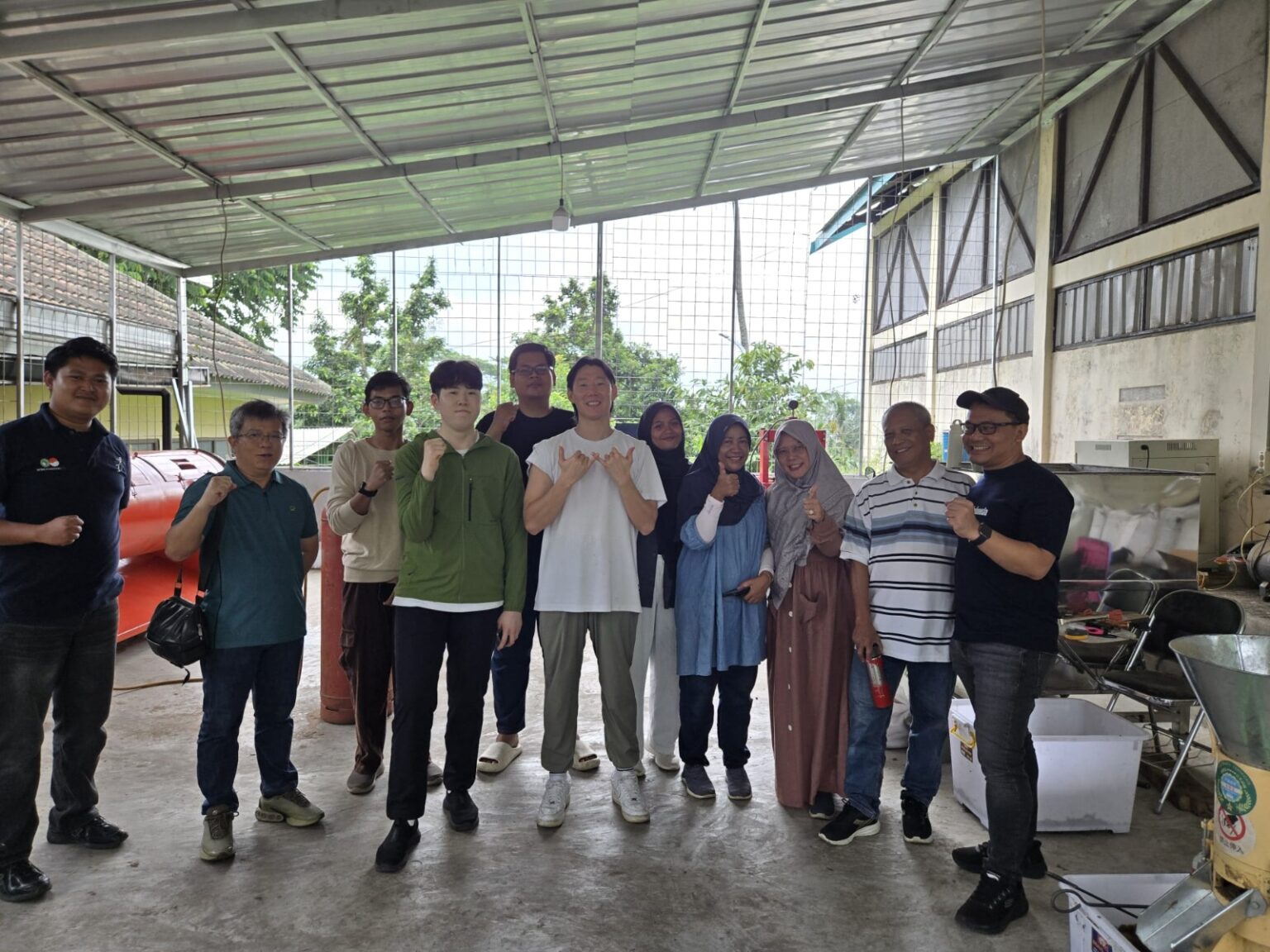
(Unila): The Faculty of Agriculture (FP) of Lampung University (Unila) reaffirms its commitment to supporting the global green energy transition through a strategic international research collaboration with the South Korean corporation, Naysor Co., Ltd.
This global-scale collaboration focuses on downstream research, specifically the development and optimization of the commercial manufacturing process of biomass pellets utilizing Empty Fruit Bunches (EFB) from palm oil.
The Head of the Joint Research Team and a Professor at the Faculty of Agriculture Unila, Prof. Udin Hasanudin, stated that this collaboration is a bold step to address the challenges of the global energy crisis by utilizing palm oil industry waste. The innovation focus is centered on the application of wet ash removal technology to produce EFB-based ashless pellets.
“The final product we are developing has the advantages of very low ash content and significantly higher calorific value. Most crucially, these biomass pellets are designed to minimize operational disruption risks in industrial boilers, such as slagging and fouling issues,” explained Prof. Udin.
Until now, the utilization of EFB as commercial biomass fuel has always been hindered by high alkali mineral content such as potassium, sodium, silica, and chlorine. These contents trigger slagging and fouling in industrial boiler machines, leading to decreased combustion efficiency and increased maintenance costs.
Through the scientific approach developed by the Unila Research Team, wet ash removal technology emerges as an effective solution by utilizing a water-based leaching principle. This washing process has proven effective in significantly reducing the alkali mineral and ash content in EFB.
The international collaboration between Unila and Naysor Co., Ltd., based in Seoul, not only reflects global recognition of Unila’s research quality (International Recognition) but also serves as concrete evidence of how academic research outcomes can transform into high-economic-value industrial products that support environmental sustainability (sustainable development goals). [Gandhi Irawan]