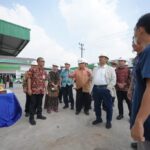
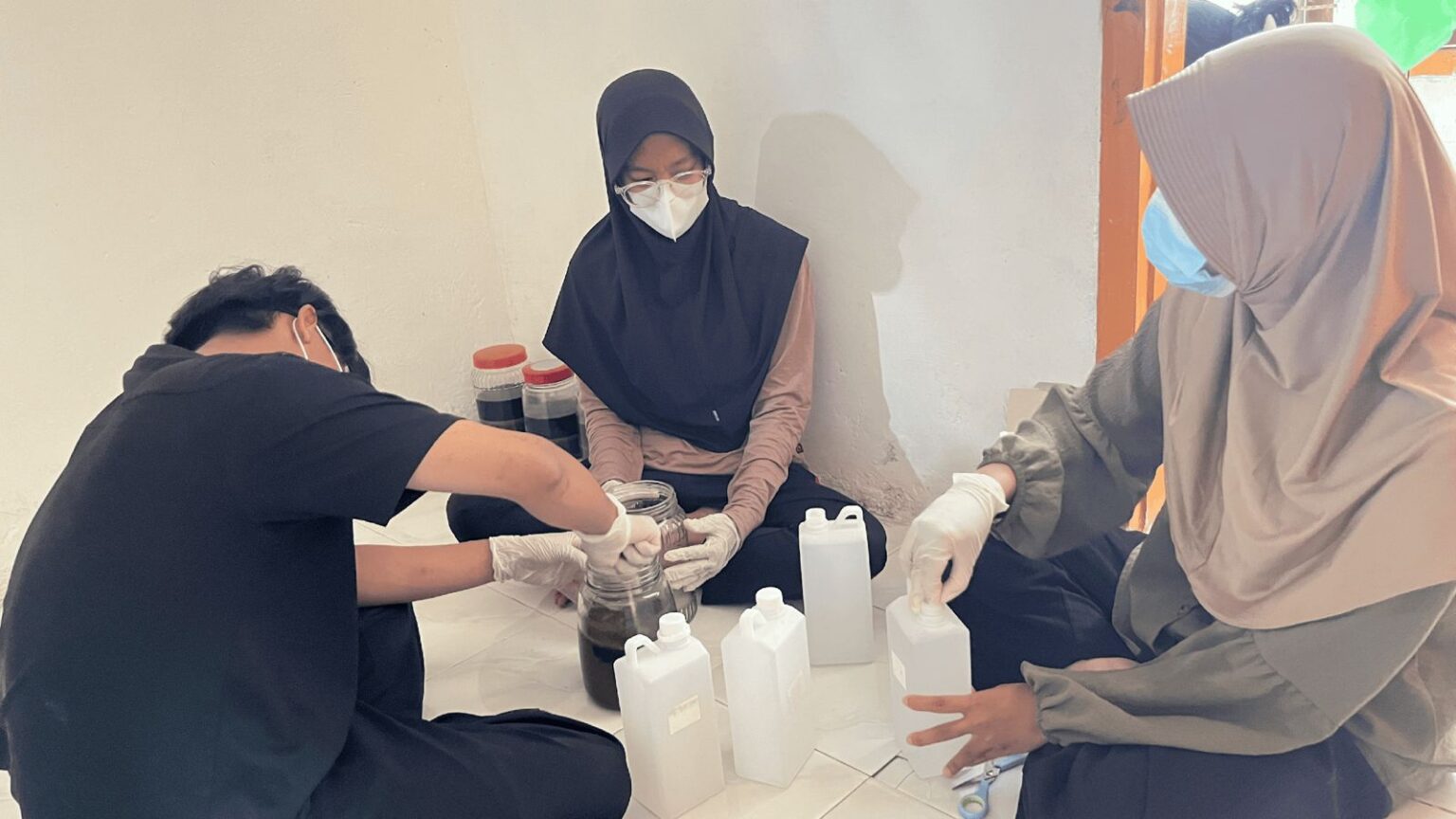
(Unila): Students from the Community Service Programme (KKN) of Universitas Lampung (Unila) for the first period of 2026 implemented a flagship work programme entitled LARVITA (Utilisation of Ketapang Leaf Extract as a Natural Larvicide) in Environment II, Way Tataan Village, East Teluk Betung District, on 4 February 2026.
This programme was motivated by the condition of residential areas where stagnant water was still found, posing a potential breeding ground for mosquitoes that cause various environmentally-based diseases, such as Dengue Fever (DBD).
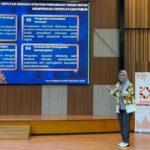
Through socialisation and direct demonstration activities, KKN students educated the community about the utilisation of ketapang leaves (Terminalia catappa) as an alternative natural larvicide that is more environmentally friendly.
In the course of the programme, the community was provided with an understanding of the active compounds contained in ketapang leaves, such as flavonoids, saponins, and tannins, which have the potential to inhibit the development of mosquito larvae.
In addition to delivering educational material, the students also conducted simple demonstrations related to the process of making ketapang leaf extract and its application in the surrounding environment.
This activity was also documented in a scientific article entitled “From Environment to Disease Prevention: Socialisation of the Utilisation of Ketapang Leaves as a Natural Larvicide in Way Tataan Village,” as a form of contribution from the students in integrating scientific research with community service.
The LARVITA programme received positive feedback from the community as it was seen to provide an easily applicable alternative solution by utilising the potential of the surrounding natural environment.
In addition to enhancing community knowledge, this activity also encouraged awareness of the importance of maintaining environmental cleanliness as a preventive measure in disease prevention.
Through this programme, KKN students from Unila hope that the community can independently and sustainably apply the knowledge gained, thereby creating a healthier environment free from the risks associated with mosquito-borne diseases. [Gandhi Irawan]