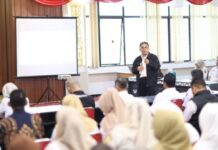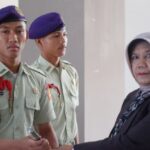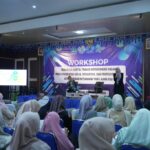
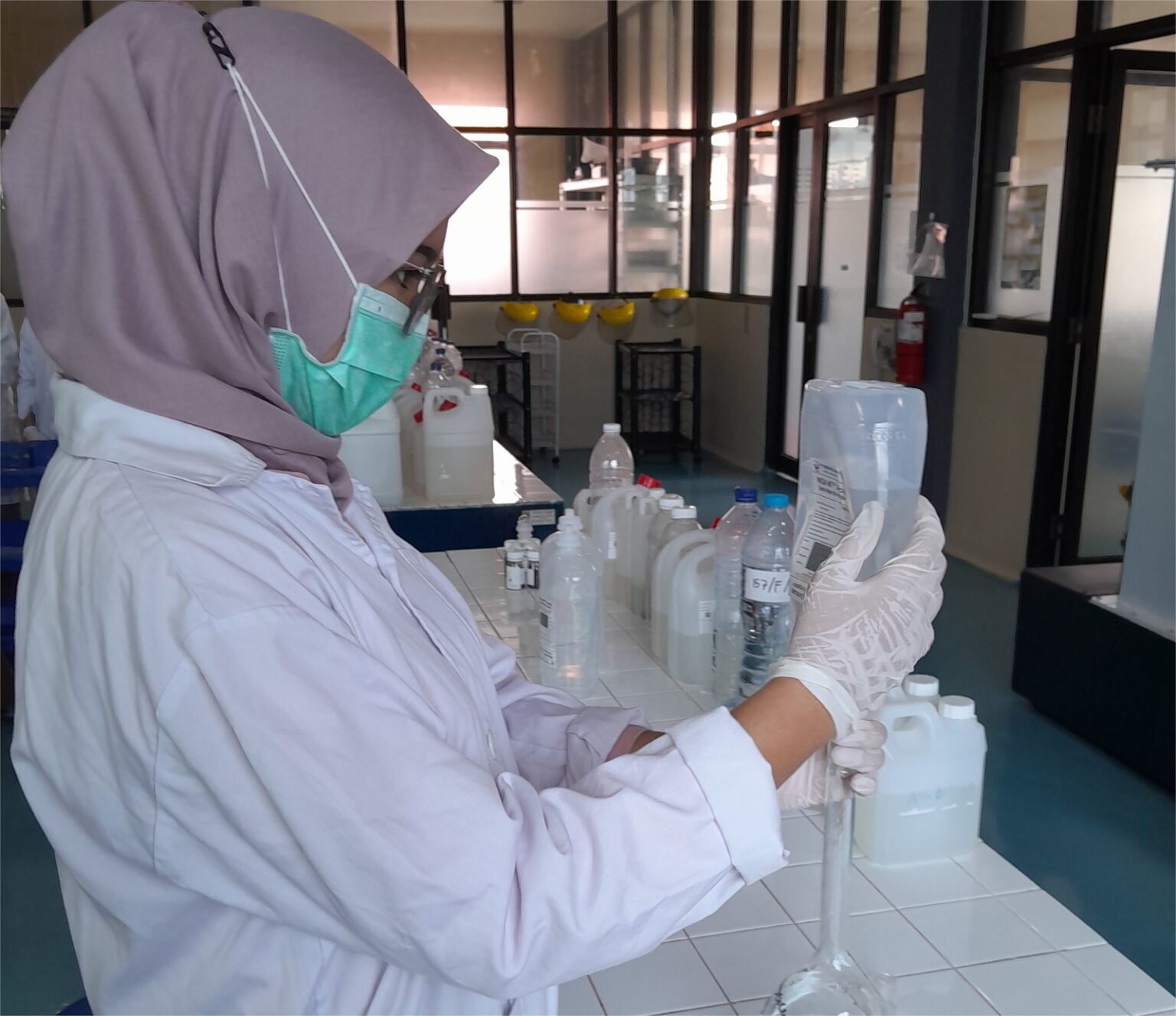
(Unila): A female student from the University of Lampung (Unila) has once again made a proud achievement. Calesta Adinda, a student in the Biology Undergraduate Program, Faculty of Mathematics and Natural Sciences (FMIPA), won Best Paper at the 2nd International Colloquium in Medical Biotechnology and Health Sciences (ICMBHS) in 2025.
The International Colloquium in Medical Biotechnology and Health Sciences (ICMBHS) 2025 is an international colloquium (academic/scientific forum) held as a platform for scientific exchange, discussion, and collaboration among researchers, academics, and practitioners in the fields of medical biotechnology, pharmacy, and health sciences.
This event will be held on May 14-15, 2025, and is organized by the Faculty of Medicine (FK) of the University of Lampung (Unila) in collaboration with the Biotechnology Research Institute, Universiti Malaysia Sabah (UMS).
In this competition, Calesta raised the topic of Analysis of Cadmium (Cd) and Lead (Pb) Levels in Water Samples by Atomic Absorption Spectrophotometry (AAS) at the Lampung Health Laboratory Center, which won the Best Paper 2nd ICMBHS 2025.
“I chose this topic because the issue of heavy metal contamination in water is increasingly relevant to current environmental conditions. I hope this research can provide a scientific overview of water quality and support environmental monitoring efforts,” said Calesta during a WhatsApp interview on Tuesday, January 6, 2026.
In her research, Calesta used the Atomic Absorption Spectrophotometry (AAS) method because it has high sensitivity, accuracy, good selectivity, and standardized analysis procedures, so that the results obtained are scientifically accountable.
The main contribution of this research is to provide scientific data on Cd and Pb levels in water in certain areas so that it can be used as a basis for water quality monitoring, assist in health risk assessment, support environmental health policies, and serve as a reference for further research.
However, Calesta also acknowledged the limitations of her research, such as the limited number of samples, the focus on only two types of metals, and the narrow coverage of the sampling area.
“I hope this research can be developed with a larger number of samples, a more diverse analysis of metal parameters, and a study of the impact of exposure on public health,” said Calesta.
In closing, she advised students not to hesitate to participate in international scientific forums. Coming from Krui, West Pesisir Regency, she emphasized that regional background is not a barrier to achieving success at the global level.
According to her, the courage to start, consistency in learning, and the willingness to discuss and go through the process are the main keys. With continuous effort, prayers from parents, and guidance from lecturers, students from rural areas also have the same opportunity to perform and be recognized in international scientific forums. [Gandhi Irawan_Muzamil Kakar]