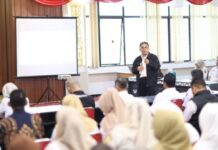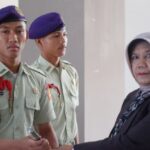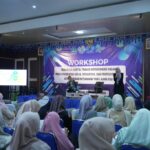
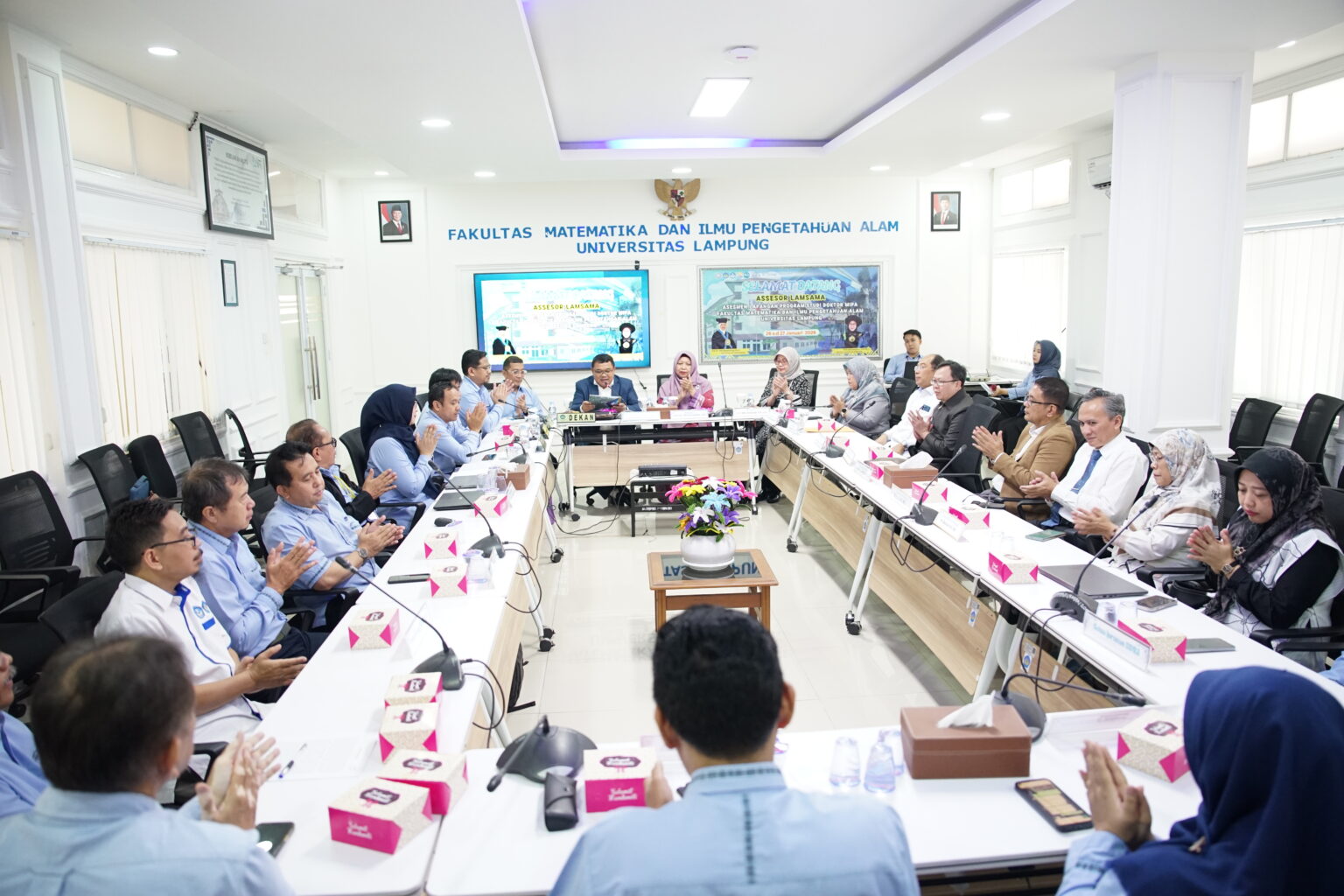
(Unila): The University of Lampung (Unila) conducted a Field Assessment (AL) for the Lamsama Accreditation of the MIPA Doctoral Study Program, on Monday, January 26, 2026, on the second floor courtroom of the Dean’s Building of the Faculty of Mathematics and Natural Sciences (FMIPA) on the local campus.
The field assessment was opened by Unila’s Vice Rector for Academic Affairs, Prof. Dr. Eng. Suripto Dwi Yuwono, S.Si., M.T. In his remarks, he emphasized Unila’s commitment to maintaining and improving the quality of higher education, especially at the doctoral level, to align with national and international standards.
Field assessment is part of the accreditation process carried out by the Independent Accreditation Institute for Natural Sciences and Formal Sciences (Lamsama) as an effort to assure external quality of study programs.
This activity aims to verify the conformity between the accreditation documents that have been prepared with the actual conditions of the implementation of the Tri Dharma of Higher Education in the MIPA FMIPA Unila Doctoral Study Program environment.
The field assessment was carried out by two assessors from Lamsama, namely Prof. Dr. Titin Siswantining, DEA, from the University of Indonesia and Prof. Hilda Assiyatun, M.Si., Ph.D., from the Bandung Institute of Technology.
The two assessors carried out a series of assessment activities which included document clarification, discussions with faculty and study program leaders, lecturers, students, and educational staff, as well as reviews of academic support facilities and infrastructure.
In this field assessment, two assessors served as key speakers. Prof. Titin Siswantining presented material related to curriculum evaluation and learning outcomes.
She emphasized that the curriculum must align with national higher education standards and be able to address the challenges of scientific development and societal needs. She also highlighted the importance of integrating research into the learning process to ensure graduates possess superior competencies in science and mathematics.
Meanwhile, Prof. Hilda Assiyatun, from the Bandung Institute of Technology, provided material on academic governance and research quality.
She emphasized that good governance will support the creation of a conducive, transparent, and integrity-based academic environment. Hilda also highlighted the importance of international scientific publications, research collaborations, and strengthening the capacity of lecturers and students to produce innovative work with broad impact.
Through the implementation of this field assessment, Unila hopes that the FMIPA MIPA Doctoral Study Program can obtain optimal accreditation results.
In addition to serving as an external evaluation, this activity also serves as a momentum for reflection and ongoing strengthening of governance, academic quality, and a culture of excellence within Unila’s Faculty of Mathematics and Natural Sciences (FMIPA), as well as encouraging tangible contributions to the development of science and technology at the national and international levels. [Muzamil Kakar]