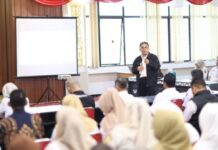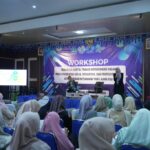
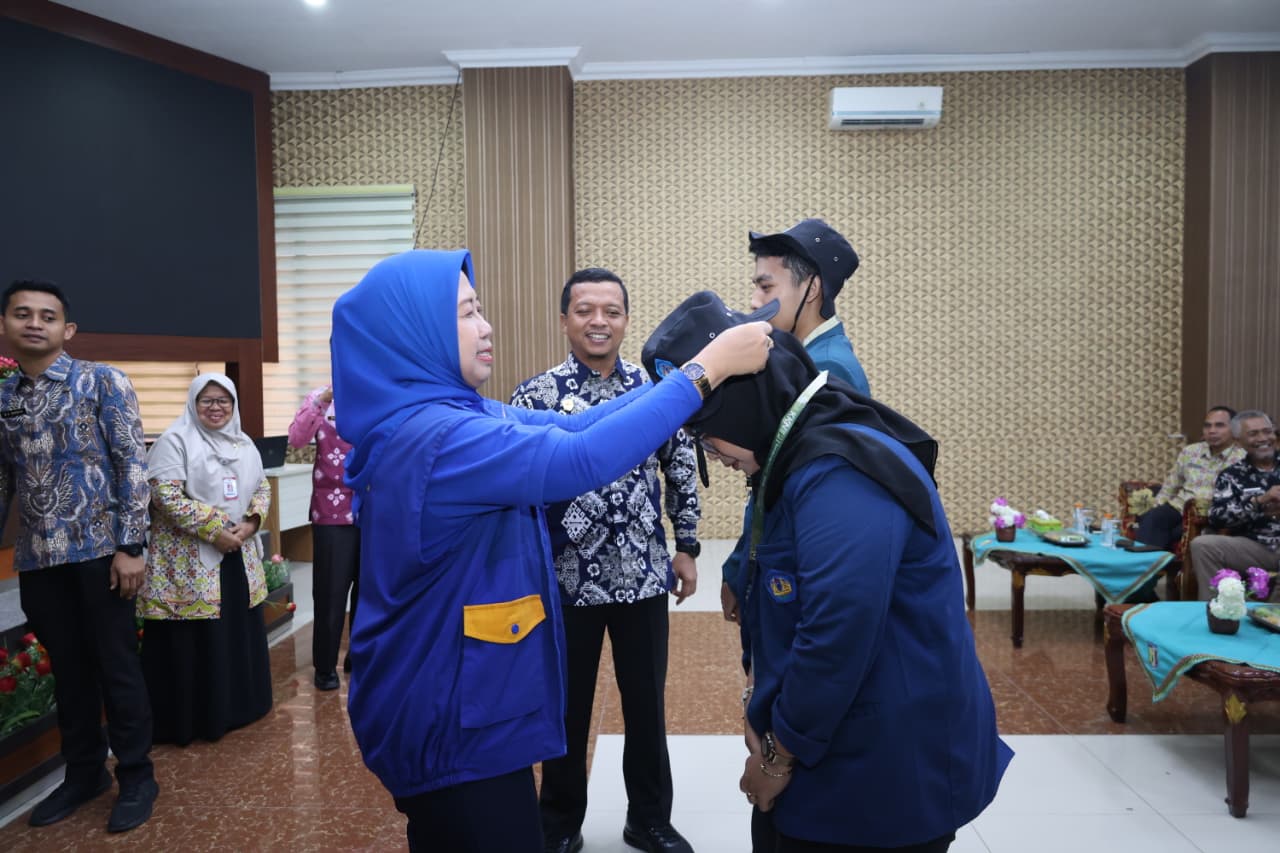
(Unila): The University of Lampung (Unila) officially handed over 130 Thematic Community Service (KKN) students to the Pringsewu Regency Government in a KKN student handover event held at the Pringsewu Regency Government Office, Friday, January 9, 2026.
The event was attended by Prof. Dr. Ir. Lusmeilia Afriani, DEA, IPM., ASEAN Eng., as the Rector of Unila and H. Riyanto Pamungkas as the Regent of Pringsewu. The handover of the KKN students is part of strengthening collaboration between universities and local governments in supporting development based on local potential.
In her remarks, Prof. Lusmeilia expressed her appreciation to the Pringsewu Regency Government for their continued support and cooperation.
“On behalf of the leadership of the University of Lampung, we express our gratitude and highest appreciation to the Pringsewu Regency Government for the welcome, support, and collaboration that has been built up so far,” she said.
She explained that the implementation of the Thematic KKN was a concrete follow-up to the cooperation agreement between Unila and the Pringsewu Regency Government, particularly in the development of mocaf products as one of the region’s leading products.
“We believe that the development of mocaf is not only about processing technology, but also about community empowerment, strengthening the village economy, and local food independence,” he said.
In the first period of 2026, Unila implemented KKN in four districts/cities, one of which was Pringsewu Regency.
A total of 130 students from various study programs were placed in 13 villages in Adiluwih District, with the assistance of field supervisors and have been occupying the KKN post since January 8, 2026.
Meanwhile, Riyanto Pangmungkas welcomed the presence of Unila’s KKN students. The local government views KKN as a strategic opportunity for students to apply their knowledge to the community.
He explained that the majority of cassava production in Lampung still relies on the tapioca industry, while other industries’ demand for mocaf continues to increase.
“Almost 80 percent of cassava production in Lampung is only used for tapioca flour, even though there is great potential for other derivative products such as mocaf. The mocaf production that we are promoting is not a large-scale industrialization, but is based on community empowerment through local clusters,” he said.
He hopes that students will be able to apply science and technology to help solve village problems and have a real impact on community welfare.
“Students must demonstrate that they are intelligent, innovative agents of change who care about village issues,” he said.
The Pringsewu Regency Government also emphasized its support for the implementation of the KKN program to ensure it aligns with regional development priorities, particularly in the agricultural sector and local food processing.
This handover ceremony also marked the start of the Unila Thematic Community Service Program (KKN) in Pringsewu Regency, which will last approximately one month. It is hoped that this program will produce tangible, sustainable results and contribute directly to improving the welfare of the village community. [Muzamil Kakar