(Unila): The Agricultural Engineering Student Association (Indonesian: Permatep) of the University of Lampung (Henceforth: Unila) received a grant for the Holistic Village Development and Empowerment Programme (PHP2D) from the Ministry of Education and Culture (Kemendikbud).
As a form of Kampus Merdeka (Independent Campus) programme implementation, the grant was used to assist local communities in Sukobinangun Village, Wayseputih District, Central Lampung to manage cassava stem waste and livestock manure into derivative products with economic values. The programme was carried out from July to December 2020.
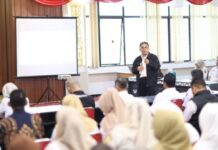
The programme advisor, Dr Ir. SaptoKuncoro, M.S., said that farmers in the village still encounter considerable difficulties on how to process cassava stem waste and livestock manure. After a harvest, they just put the waste beside their land.
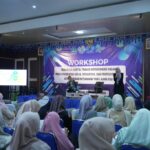
“For this reason, Permatep, through socialization and training, gives a hand with the aim of helping the local communities boost their family economy”, he said.
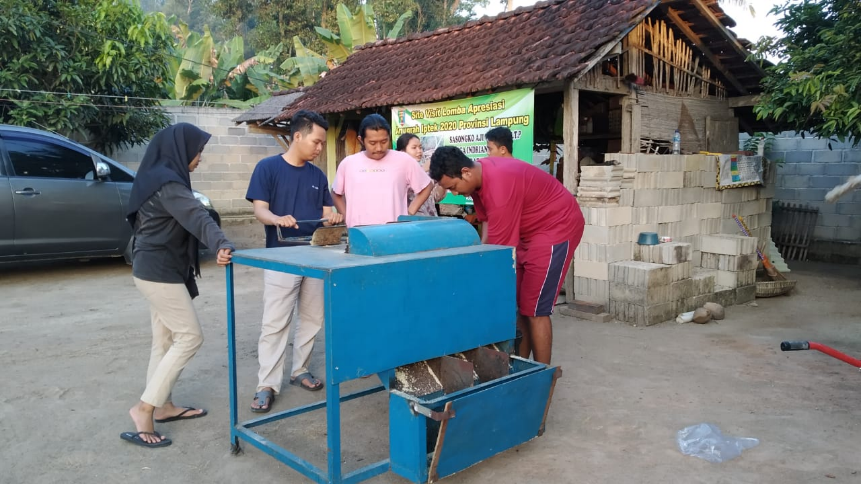
The programme includes a training on how to make the quality of cassava seedlings using a cassava stem cutter (Indonesian: Petokong) and a cassava stem sliver (Indonesian: Rabikong).
It also involves how to produce livestock feed using a cassava stem chopper (Indonesian: Rabakong) and MSN. They/Farmers are trained to make/create organic fertilizers from cassava stem waste and livestock manure using the Rabakongwith amixture of dolomite, thiroderma, EM4, and urea.
Besides, they are also trained to produce moles using banana humps with a mixture of coconut water, milk-coloured rice water and molasses. Regarding the making of bio-urine, they are trained how to mix cow urine, first sorted milk-coloured rice water and EM4. They are educated how to make use of supporting materials from their surrounding environment.
The enthusiasm of the local communities was indicated by their attendance and active participation in the programme. Apart from being a forum for conveying their aspirations, they viewed the programme was of importance to their agricultural knowledge, especially waste management.
“Hopefully, this can be beneficial to the farmers in Sukobinangun Village. I personnaly hope that the programme can be sustainable until it really becomes an independent village in terms of cassava stem waste and livestock manure management,” said Kuncoro. [Public Relations Team]