
(Unila): The enhancement of the use of the Indonesian language in public spaces, alongside the protection of regional languages, is deemed to require broader collaboration among government entities, linguistic institutions, and higher education institutions.
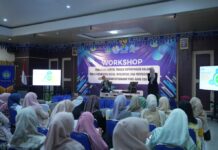
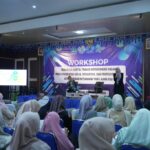
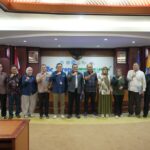
In light of this necessity, the University of Lampung (Unila) and the Lampung Provincial Language Centre signed a Cooperation Agreement (PKS) at the third floor of the Governor’s Office of Lampung Province on Tuesday, 10 March 2026.
The signing of this cooperation took place in the presence of the Head of the Language Development and Fostering Agency of the Ministry of Education and Culture, Hafidz Mukhsin.
Also present at the event were the Vice Rector for Planning, Cooperation, and Information Systems of Unila, Prof. Dr. Ayi Ahadiat, S.E., M.B.A.; the Vice Dean for Academic Affairs of the Faculty of Teacher Training and Education (FKIP) Unila, Dr. Riswandi, M.Pd.; the Head of the Department of Language and Literature of FKIP Unila; the Head of the Study Programme in Indonesian Language and Literature Education, along with the team from the Monitoring Unit for the Use of the Indonesian Language and the Protection of Regional Languages and Literature of Lampung Province.
The event was also attended by Unila’s cooperation team and staff, heads of departments within the Lampung Provincial Government, the Head of the Lampung Provincial Language Centre and staff, as well as the Monitoring Unit for the Use of the Indonesian Language and the Protection of Regional Languages and Literature of Lampung Province.
This cooperation represents a strategic step towards strengthening various language programmes in the region, ranging from monitoring the use of the Indonesian language in public spaces to revitalising regional languages, involving higher education institutions as academic partners.
The Acting Head of the Lampung Provincial Language Centre, Halimi Hadibrata, stated that the monitoring of the Indonesian language is a crucial part of efforts to maintain the sovereignty of the national language. He noted that the Indonesian language serves not only as a national identity but also as a foundation in the educational process.
“The monitoring of the use of the Indonesian language in public spaces and within documents is part of our efforts to establish the Indonesian language as the national language in our own country. We must take pride in, and indeed excel with, the Indonesian language,” said Halimi.
He explained that cooperation with higher education institutions such as Unila is essential to strengthen various language programmes that the Language Centre has been implementing, including the monitoring of the use of the Indonesian language in public spaces as well as regional language revitalisation programmes.
Halimi also emphasised that Lampung has specificities in its language policy, as it not only focuses on the monitoring of the Indonesian language but also on the protection of regional languages.
“In Lampung, there is a specificity, namely that we do not only monitor the use of the Indonesian language but also protect regional languages. Who else will care about the regional languages of Lampung if not the people of Lampung themselves, if not us?” he remarked.
Meanwhile, the Head of the Language Development and Fostering Agency, Hafidz Mukhsin, considered collaboration with higher education institutions to be part of efforts to strengthen the participation of various parties in language development.
“As a form of implementing activities that embrace togetherness, the Language Agency collaborates with Unila. This cooperation is an effort that we will mutually agree upon as a form of collaborative support,” said Hafidz.
He noted that the cooperation has several strategic objectives, including prioritising the use of the Indonesian language, strengthening the preservation of regional languages, and implementing regulations concerning the internationalisation of the Indonesian language.
He also mentioned the significant momentum for the Indonesian language following its recognition as an official language in the UNESCO General Assembly.
“If UNESCO has recognised the Indonesian language, then we as the people of Indonesia must certainly take pride, must be proficient, and must continue to prioritise and use the Indonesian language in our daily lives,” he stated.
The Lampung Provincial Government welcomed this cooperation as it aligns with various local policies aimed at strengthening the use of the Indonesian language and preserving regional languages as part of the cultural identity of the community.
The Assistant for General Administration of the Lampung Provincial Secretariat, Sulpakar, conveyed that the local government, together with Unila, had previously advocated for the reopening of the Lampung Language Study Programme as part of efforts to preserve regional languages.
“The Lampung Provincial Government, in collaboration with the University of Lampung, has fought for the re-establishment of the Lampung Language Study Programme. I vividly remember the lengthy struggle until finally, in 2021, the University of Lampung reopened that study programme,” said Sulpakar.
He added that the strengthening of the use of the Indonesian language and the protection of regional languages and literature cannot be achieved by one party alone. Therefore, these efforts need to become a collective movement involving the government, educational institutions, the business sector, and the community.
Through the signing of the PKS between Unila and the Lampung Provincial Language Centre, it is hoped that various language programmes can proceed in a more directed manner.
In addition to supporting the monitoring of the use of the Indonesian language in public spaces and official documents, this cooperation also opens avenues for academic collaboration in the development of language studies and the strengthening of regional language revitalisation programmes in Lampung. [Gandhi Irawan]