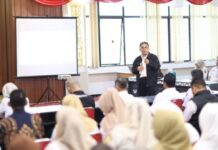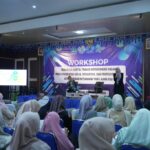
(Unila): Prof. Karomani, the Chairman of the Rector Forum for Strengthening National Character (FRPKB), was acting as the speaker at a coordination meeting on the Development of State Defense Awareness (PKBN).
The meeting was hosted by the Directorate General of Defense Potential of the Ministry of Defense of the Republic of Indonesia at Raffles Hotel, Mega Kuningan Jakarta, Thursday, June 10, 2021.
Prof. Karomani, who is also the rector of the University of Lampung, pointed out the results of a number of surveys in some Indonesian campuses, indicating a growing tendency towards the deterioration of characters and radicalism among the younger generation, as well as academic staff.
He suggested two strategies, the systematic and quadruple helix model approaches, as ways out to prevent students and academic staff from being potentially radical.
The systematic approach refers to universities’ efforts to prevent students and academic staff from being radical through modifications in curriculum, including the content of the state defense character, reinforcing institutional coaching and student organization activities, as well as national insights for lecturers and staff,” said Karomani.
The quadruple helix model approach constitutes the collaboration among actors, i.e., governments, academics, community organizations, and media as an attempt to promote nation characters in higher education settings across Indonesia.
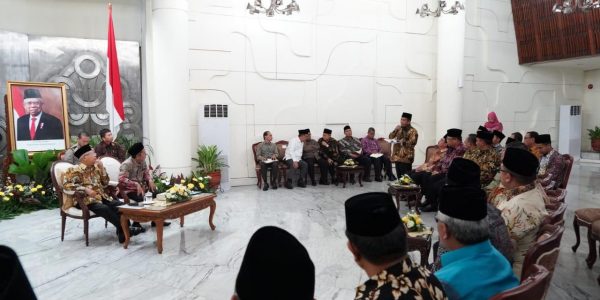
Different from Karomani, Muhammad Ali Ramdhani, the Ministry of Religious Affairs Director General for Islamic Education, insisted the importance of religious moderation in raising awareness of the country’s defense among students and those exposed to radicalism.
With reference to the Alvaa Research Center survey and Mata Air foundation that 39% of students from several universities across Indonesia have been exposed to radicalism, due to the brainwashing process through social media without an offline meeting, simply providing readers or followers with jargons that may interest individuals to be exposed to radicalism.
The content regarding radicalism on social media is believed to have attracted students’ attention which in turn falls into a radicalism trap.
“Students are now so familiar with information technology that they have a very wide range of networks and get into contact with diverse cultures, ways of thinking, and even beliefs,” Dhani said.
He continued that state defense materials need to be urgently introduced in campus so that students have attitudes of tolerance, values of tenacity, and nation endurance for the sake of the nation and state sustainability ultimately to achieve national goals.
“It is necessary to introduce great understanding of religious moderation to millennials as well as working-aged and young groups who are literate of social media,” Dhani said.
“Students need to have good religious insight, promoting the values of religious moderation as a shield of radicalism extreme spreads both in real and virtual worlds” he added. [PR Team]