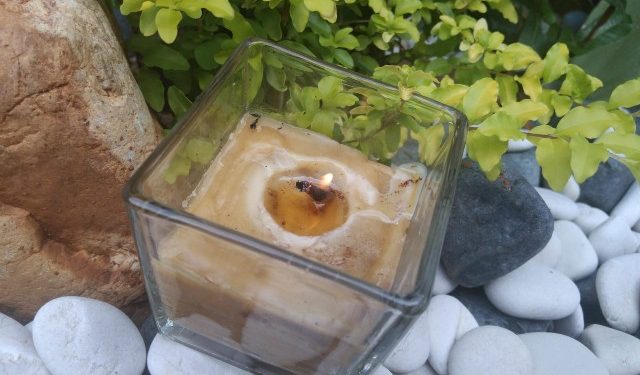
(Unila): A group of Unila students created aromatherapy candles with honeycomb as the primary substance. The candle’s combination of mint leaves and citronella extract was found to have not only emitted a calming scent but also worked as a mosquito deterrent.
The research team of 5 students, among others, Mahfud Sidik (Biology 2019), Ani Andri Yani (Biology 2019), Indah Ayu Lestari (Biology 2020), Lousanja Dira Sa’udah (Chemistry 2019), and Gustin Lestiani (Chemistry 2018), deserved the gold medal for the life science category (WSEEC) at the World Sciences, Environmental, and Engineering Competition.
The event was attended by 196 participants from three different continents, namely Asia, Europe, and America. Bee hives are made from bees, which are frequently viewed as trash by beekeepers. In terms of the bees themselves, beewax is the primary substance of honey cells and eggs, particularly in bees from the genus Apis.
Previous studies revealed that beewax made in beehives has advantages for cleaning the air. Paraffin produced by wax glands on the ventral abdomen of worker bees is used as substance to make beeswax. Beewax is made of sugars, i.e., glucose, fructose, and sucrose.
Significant advancements in the utilisation of beewax have not been made at this moment. Research on beeswax from Apis dorsata and essential oils of citronella and mint leaves needs to be conducted to explore aromatherapy candles with a dual anti-mosquito function.
Honeycomb refers to the primary substance used to create aromatherapy candles. Although any kind of beehive may be utilised to make candles, apis dorsata beehives are better selected for this investigation, according to Dira.
She continued that honeycomb-based aromatherapy candles are extremely eco-friendly and capable of emitting a distinct scent, which may leave a calming atmosphere in the space. The aromatherapy candle also serves as a mosquito deterrent since it contains a combination of citronella essential oils, commonly known as citronella oil.
The study was carried out at Unila’s Zoology Laboratory at the Faculty of Mathematics and Natural Sciences’ Department of Biology. The equipments to support the investigation include stirrer rods, beakers, water baths, stopwatches, containers for aromatherapy candles, filters, office supplies, and mosquito cages.
The ingredients include honeycomb from Apis dorsata, citronella, mint leaf, candle wick, and adult mosquitoes.
The honeycomb materilas were purchased from a beekeeper in Bandar Lampung. Honeycomb of approximately one kilogram is then processed to result in aromatherapy candles.
Making aromatherapy candles is such a simple process that we can dot it easily. The honeycomb is first melted in a beaker glass before being placed in a water bath.
The melted beeswax was then filtered and was split in three parts each of which has different formula: formula A (100 percent beeswax), formula B (94 milliliters of beeswax and three milliliters each of lemongrass and mint leaf essential oils), and formula C. (5 ml essential oil). 90 ml of beeswax, 5 ml of mint leaf essential oil, and citronella).
The freezing process goes fairly quickly. Mix the flavorful mint leaves and lemongrass into melting beeswax and shortly shape and equip it with wick like regular candles.
Organoleptic testing, such as scent, colour, wax quality tests, burning time tests, and hedonic or preference tests, are conducted after the wax is shaped. Additionally, a mosquito cage was used to test a mosquito repellent (mosquito cage).
Each mosquito cage was filled with formulations A, B, and C as part of the procedure. Each cage consists of 25 mosquitoes and each candle placed in the mosquito cage is lit for approximately 30 minutes for each formula.
The wax formulae A, B, and C have passed the organoleptic test due to their physical properties, the shape of which was not easily fractured or cracked, and their yellowish hue, the formulation of which met the required colour standard—satisfied SNI.
The findings of the olfactory observations showed that the three formulae, A, B, and C differed in their aroma, where A was characterized by honeycomb scent, B had a distinctive citronella and mint leaf odour, and formula C smelled a more potent aroma of essential oils.
Further finding of the test on insect repellent indicated that no dead mosquitoes were found in formula A but 3 passive mosquitoes, or 22 active mosquitoes. Similarly, there were no dead mosquitoes in formula B, but 23 passive and 7 active mosquitoes.
Different from the first two formulae, A and B, no active mosquitoes were discovered in formula C, but 2 dead mosquitoes, and 23 passive insects. This suggests that the more concentration the essential oil’s anti-mosquito increases, the more effective it should be.
The duration of processing of materials and that of product shape took for approximately two weeks, while product development and manufacturing in the lab spent for two to three days.
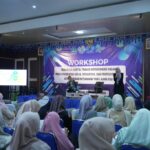
Then, the paper with respect to the result of the study, titled “The formulation of aromatherapy candle preparations from beewax as an antimosquito combined with citronella essential oils and mint leaves” is necessarily presented in English before the judges from different countries.
The team finally deserved gold medal for the life science category of the World Sciences, Environmental, and Engineering Competition. [PR Team]