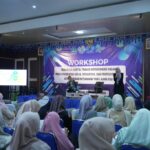
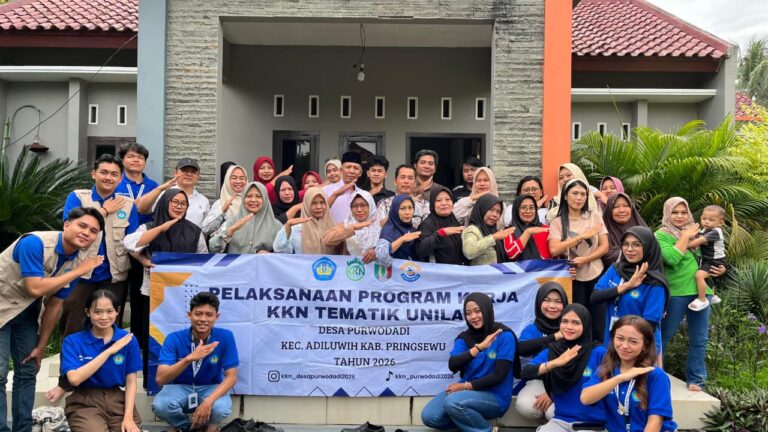
(Unila): Students of the Community Service Program (KKN) of the University of Lampung (Unila) period I in 2026 successfully implemented the Google Maps Optimization Workshop & Mocaf (Modified Cassava Flour) Brand Development Strategy work program, which was located in Purwodadi Village, Adiluwih District, Pringsewu Regency, and was implemented on January 21, 2026.
Beneath the cassava fields that serve as the economic lifeblood of the community, lies a vast potential known as Mocaf (Modified Cassava Flour). However, before the student community service program, this village’s flagship product remained a silent product, marketed in a limited manner, with virtually no digital visibility.
Limited online marketing , suboptimal branding, and limited market reach within the local area are key issues. In fact, the Purwodadi Mocaf production center was previously unlisted on Google Maps and had no social media promotions. The product existed, and its quality was maintained, but access to the wider market remained limited.
Recognizing this gap, Unila’s Thematic Community Service Program (KKN) students initiated a digital marketing work program through a Google Maps Optimization Workshop & Mocaf Branding Development Strategy. Google Maps was chosen as the gateway to transformation because it’s free, easily accessible, and proven effective in increasing business location visibility, especially for rural MSMEs seeking easier customer discovery.
This work program was carried out by a number of Unila students from various departments, consisting of Bernadeta Bias Pertiwi and Hanu Aji Rafly Saputra as Person in Charge (PIC), along with members consisting of Rhafli Adhyaksa Pratama, Mayadha Syabbillah, Renita Dwi Wicahyani, Anggi Anggraini, Juan Pembangunan, Macario Jovan Hutabarat, Febri AnnasTia, Sulistyowati, under the direction of Prof. Dr. Ir. Sugeng Prayitna Harianto, MS, as Field Supervisor (DPL).
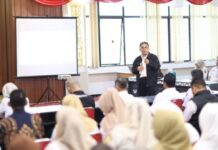
In its implementation, the workshop presents practical, applicable materials, starting from an introduction to MSME branding, optimizing business profiles on Google Maps, to managing social media as a business showcase.
“Before the training, we didn’t understand how people could find village products online. After being mentored by the KKN students, we learned how to display our business location, manage our profile, and promote mocaf digitally,” Hanu said.
The training atmosphere felt lively as participants not only listened but also put them into practice. Mocaf Center locations were registered and optimized on the spot. The production house now has an informative digital profile that makes it easier to track potential buyers and business partners.
Cross-campus collaboration also contributed to the program’s implementation. Unila’s Community Service Program (KKN-T) students did not work alone, but rather collaborated with IPB University’s Community Service Program (KKN-T) students who had previously served in Purwodadi Village. The IPB team acted as a kind of field pioneer, mapping the village’s potential, identifying community characteristics, and designing the initial steps for developing Mocaf as a flagship product.
Armed with this data and experience, Unila’s Community Service Program students brought new energy. They accelerated the program through technical workshop execution, strengthening digitalization strategies, and developing branding innovations. While the IPB team served as a compass, the Unila team served as the driving force in the field.
In terms of product identity, participants were encouraged to highlight Purwodadi’s local characteristics, from the quality of the cassava raw materials, the hygienic production process, to the narrative of mocaf as the village’s leading healthy product. This storytelling approach is believed to differentiate mocaf products from other regions.
The warmest enthusiasm came from the women from the Family Welfare Movement (PKK) and the Women’s Farmers Group. Their curiosity about technology slowly transformed into enthusiasm. Social media, previously considered merely entertainment, is now understood as an economic bridge. Despite initial challenges with equipment and technical terms, their patient guidance has enabled them to emerge as the driving force behind the village’s digital promotion.
Support also poured in from various parties. The Purwodadi Village Government views mocaf as a strategic economic identity and has prepared promotional facilities and institutional strengthening for MSMEs. Semocindo also provides control support and opens up opportunities for national marketing networks, even potential exports in the future.
Meanwhile, the Pringsewu Regency Agriculture Service is committed to maintaining sustainability, especially in increasing the added value of farmers’ cassava and developing derivative products.
As a follow-up, Unila’s KKN students left behind three concrete outputs : digitizing production locations on Google Maps, managing Instagram accounts by village teams, and installing identity banners at production centers. These steps ensure the program doesn’t remain merely ceremonial but instead serves as a foundation for sustainable marketing.
Through this program, Bernadeta emphasized the importance of fostering village economic independence through local potential combined with digital innovation and cross-sector collaboration.
“Limited market reach is no longer a barrier as long as villages are willing to transform and open to innovation,” she said.
From humble cassava, Purwodadi Village is carving its long path to becoming a recognized, sought-after, and respected village, from digital maps to the national market. [Muzamil Kakar]