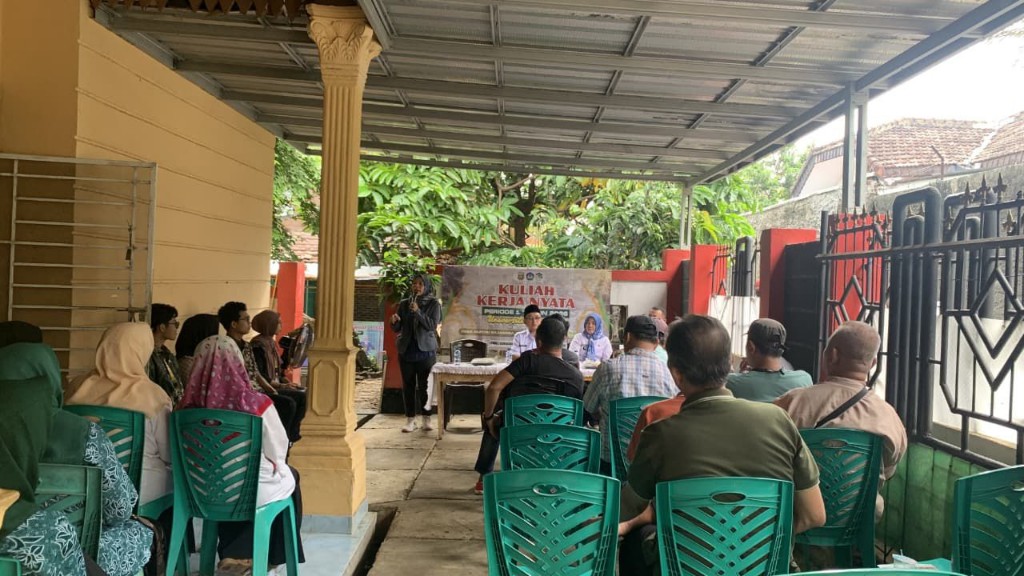
(Unila): The problem of household organic waste, which has not yet been optimally managed, has encouraged the emergence of solutions based on community empowerment.
In Rajabasa Nunyai Village, Rajabasa District, Bandar Lampung City, students of the Community Service Program (KKN) of the University of Lampung (Unila) initiated a maggot cultivation program as an alternative to organic waste management that is environmentally friendly and has economic value.
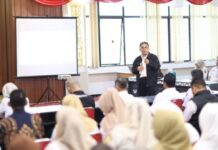
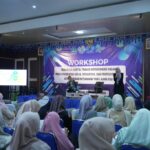
The socialization and practice of maggot cultivation was carried out on Wednesday, February 4, 2026, in RT 07, Neighborhood 02, Rajabasa Nunyai Village.
Present to provide support in the activity were the Head of Rajabasa District Rachmatsyah, the Head of Rajabasa Nunyai Village Nurmala Sari, the Head of Neighborhood One and Neighborhood Two as well as the Head of RT, Linmas, PKK in LK Two Rajabasa Nunyai. Also present were the Field Supervisor Lecturer of Rajabasa Nunyai, Dr. Rasmi Zakiah Oktarlina, M. Farm., and the Socialization Speaker Amir Syarifudin, S.Pd.
The maggot cultivation program was implemented through outreach activities involving the active participation of the local community as well as the inauguration of the Maggot House as a means of managing organic waste.
Residents attended a presentation on organic waste management and maggot cultivation mechanisms, and received a guide module for further learning. Following the inauguration, the public was also invited to observe the maggots and their process of decomposing organic waste.
The Head of the KKN Program at the University of Lampung, Rajabasa Nunyai 2 Village, Harun Al Rasyid, said that this activity was part of the commitment of Unila students to provide real solutions to environmental problems in the community.
“We want to help residents manage organic waste independently and sustainably. Maggot farming is a simple solution that anyone can implement,” he explained.
This maggot cultivation outreach and mentoring program was conducted during the one-month Community Service Program (KKN) period 1 in 2026. The KKN team regularly monitored the development of maggot cultivation and provided guidance to residents to ensure the program’s smooth and sustainable implementation.
According to Harun, the Maggot House Program is the fruit of the sacrifices of energy, thought, and material that have been poured out for a long time. “Hopefully our dedication will be of lasting benefit to the community,” he said.
The Maggot House is not merely a physical symbol. Harun hopes that this facility can be implemented effectively by residents, especially in the Rajabasa Nunyai sub-district, as a smart solution for managing organic waste while also providing additional economic value for the community. May our efforts today bring blessings to the environment.
Rajabasa Sub-district Head Rachmatsyah stated that organic waste has great potential if managed properly. Through maggot cultivation, household waste can be decomposed naturally and quickly, thereby reducing the volume of waste in residential areas.
“The government certainly strongly supports and appreciates this program. Through maggot cultivation, organic waste can be re-managed, reducing household waste and helping create a cleaner environment,” he said.
He also emphasized that the maggot cultivation program has the potential to be a promising business for the residents of Rajabasa Nunyai Village. This cultivation is considered easy to implement because it doesn’t require a large area and utilizes organic waste as the maggots’ primary food source.
“Maggot cultivation is environmentally friendly and low-cost. All it takes is will and consistency,” said Rachmatsyah.
He hopes this program can continue even after the KKN period has ended. “If carried out consistently, maggot cultivation will not only be able to reduce household organic waste, but also open up small business opportunities based on waste management for the people of Rajabasa Nunyai Village,” he concluded.
The program began with a socialization of organic waste management, an introduction to maggot cultivation, and hands-on practice on media creation and maggot care. During the practical sessions, residents enthusiastically participated in each stage and actively discussed waste sorting, the decomposition process, and the utilization of the cultivated products.
“We, the Rajabasa Nunyai 2 Community Service Team, hope that the inauguration of the Maggot House will be the first milestone in creating a self-sufficient environmental ecosystem in this sub-district. We hope this facility will continue to be managed consistently by the community, so that the organic waste problem can be resolved at the source while providing sustainable economic value for residents,” said the KKN Team. [Muzamil Kakar]