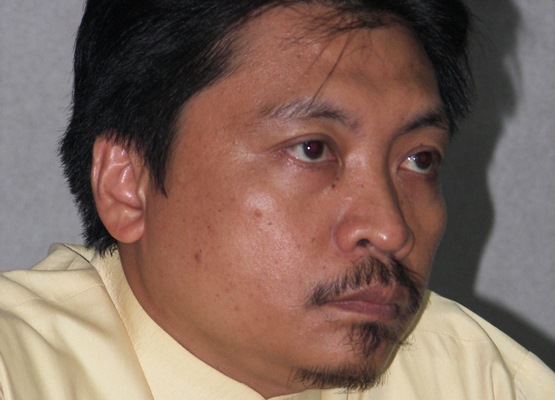
Asrian Hendi Caya Lecturer at the Faculty of Economics and Business the University of Lampung
AS village development has become one of the nation’s fundamental concerns, the village funds are given to be managed directly. The funds have gradually increased. In 2019, the total fund was accounted for IDR70 trillion. However, the amount of funds increases 2 trillion in this current year into IDR72 trillion. It is projected to cover 79,954 villages. In other words, it means that each village receives about Rp900 million on average. The sum of the fund excludes the funds from the province, district, and also the village income.
This year, Lampung receives an allocation of Rp2.454 trillion. In details, IDR313.43 billion for Central Lampung, Rp293.68 billion for Tanggamus, Rp281.37 billion for East Lampung, Rp263.69 billion for South Lampung, Rp248.16 billion for North Lampung, Rp187.68 billion for Way Kanan, Rp157.34 billion for Pesawaran, Rp134.86 billion for Tulangbawang, Rp129.66 billion for Pringsewu, Rp127.43 billion for West Lampung, Rp121.01 billion for Pesisir Barat, Rp103.82 billion for Mesuji, and Rp91.90 billion for Tulangbawang Barat.
Lampung has 2,435 villages consisting of independent, developed, developing, and also underdeveloped villages. It means each village receives around Rp1 billion on average.
Funds are not the only determinant of the success of village development. The allocation of funds is essential because the funds’ performance is influenced by what funds are allocated. That is the underlined reason why The Ministry of Finance provides incentives to villages that are performing well in 2020. The allocation of performance is 1.5% of the village budget or around IDR1.08 trillion. This year, there are 7,495 villages, that receives the performance allocation. Each village gets around Rp144 million. At the village level, these funds are adequate in adding to the village’s fiscal capacity.
The allocation of village funds performs well if the funds are harnessed for increasing the community welfare, enhancing the quality of life, and reducing poverty. Based on this objective, the priority of village funds is allocated to finance development and community empowerment.
Thus, the management of the village funds is carried out in a self-managed. Each village requires to apply local materials and involving local workers. This direction is intended so that the benefits of village funds are optimal for the village’s progress and community welfare. Villages, then, are hoped to be able to create jobs and open village production markets to enhance the community income and drive the village economy.
The central government provides the villages with many amenities such as funds, directions, and also budgeting mechanisms. However, these do not guarantee that the allocation will run appropriately because all of them remain as passive resources. In fact, the application will entirely depend on the executor as an active resource. Active resources are people, from leaders to implementers.
The Provincial Government has guided village officials by assisting and controlling the village in its development. The community has also participated in village development. For example, the village ambulance at Tanggamus is a collaboration between the village budgets and regency budgets. Also, road standardization, such as the paving block/ concrete road by the South Lampung Regency Government, is an example of the effort to achieve village funds performance. Nevertheless, this does not mean that village funds have nothing problems or have performed well.
Problems and Challenges
One of the directions in Lampung to attain the village funds performance is a minimum allocation of 10% for the development of community health. In fact, the result of 2018 showed that 80% of 2464 villages did not reach the target. This is the challenge. Some regencies remain low on the health sector, such as Mesuji (0.95%), Pringsewu (4.76%), West Lampung (6.11%), and Tulangbawang Barat (10.42%).
Indonesia Corruption Watch (ICW) recorded the corruption cases in village funds during 2015-2018 reaching up to 252 cases, which continued to rise steeply from 22 cases in 2015 to 96 cases in 2018. These cases involved 214 village heads, which in 2015 were only 15 village heads and boosted to 89 village heads in 2018. It caused the State losses to Rp107.7 billion, which included cases of budget markups, budget misuse, embezzlement, fictitious reports, and bribery cases.
The Corruption Eradication Commission (KPK) study in 2015 noted that there were four potential problems with village funds, especially for the incomplete regulation and sometimes overlapping, poor governance and performance, weak supervision, and unprofessional assistants. These are considered as problems.
On one side, the funds given may allow a village an opportunity to determine and administer its development based on its needs. Besides, the funds’ management may also provide an experience that will increase the capacity of the village officials. On the other hand, optimizing the use of village funds to improve community welfare is necessary needs to be developed as there are still many irregularities of village funds.
Synergy from All Parties
For this reason, all parties must work together, creating synergy as to overcome deficiencies in the allocation and implementation of village funds as well as increase the capacity of the village officials related to village funds at any village, district, and provincial levels. Also, it is vital to complete the regulations and accomplishing the related systems.
The Central Government reviews the regulations that still overlap between ministries; complements required regulations to create tangible roles at the executor level; and also establishes the supervision and accountability funds mechanism.
Moreover, the Provincial Government strengthens the capacity of village officials through guidance and training. The regency government enhances village performance through assistance and supervision.
Based on Lampung Post news, Wednesday (19/2), The General Inspector of the Ministry of Home Affairs, Tumpak Haposan Simanjuntak, said that a regent also plays a role in supervising the village funds. He is responsible for verifying the data of villages numbers and the documents of distribution requirements, determining the detail rules of funds allocation for each village and the technical guidelines, as well as evaluating the implementation that funded by village funds.
The community, then, supports village development by expressing their aspirations and also participating in village activities. Village officials are demanded to work hard, be disciplined, and responsible for paying attention to the communities’ aspirations by not abusing their positions, obeying the rules, and continuing to increase their competence and insight. The village head and related authorities are obliged to be careful in using the funds because all eyes are on them.
It is time we work together, creating synergy, to build the village. Many populations live in the village; therefore, the villages also become the basis of the nation’s progress. []