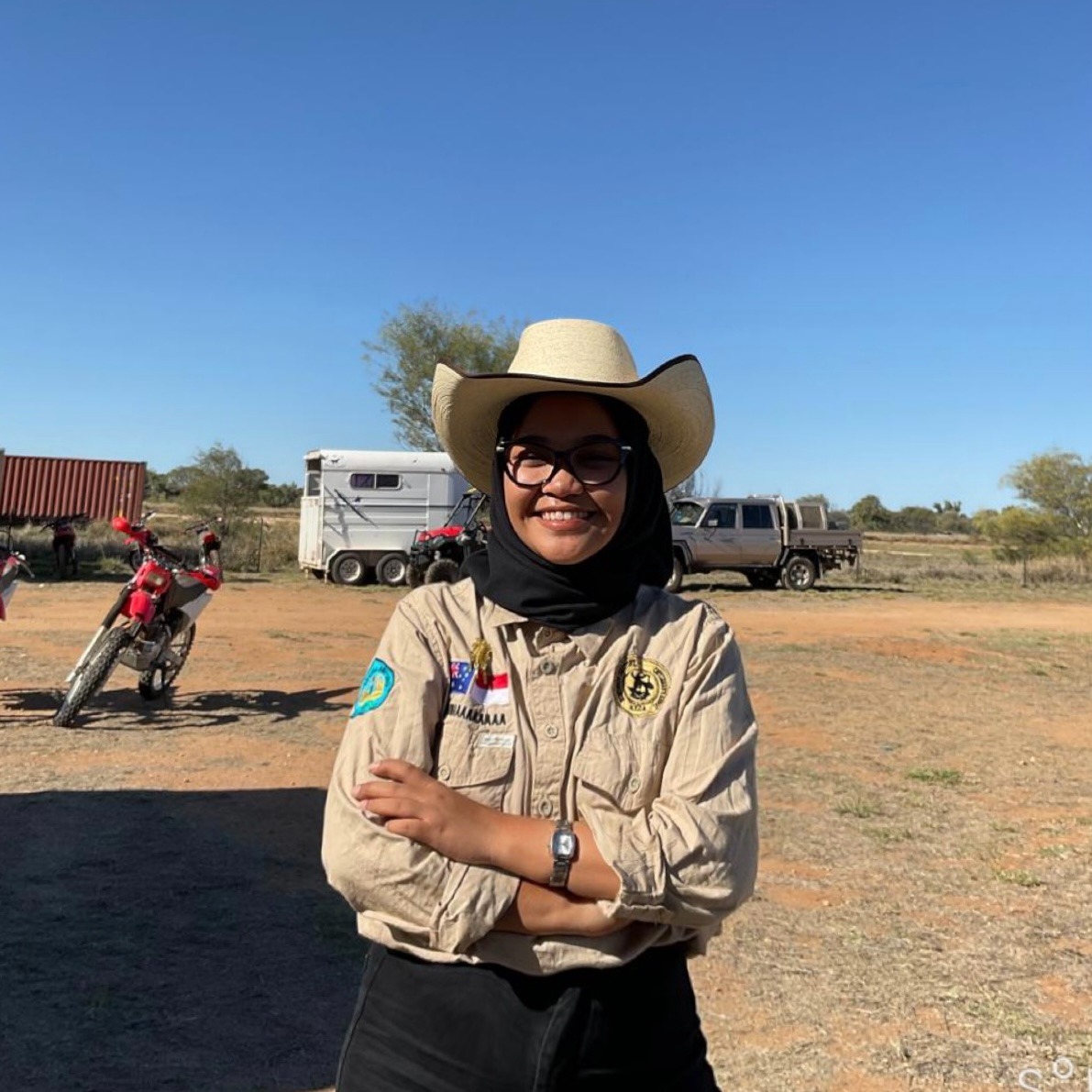
(Unila): Students from the Faculty of Agriculture, the University of Lampung (Unila) had the opportunity to take part in an internship at a livestock company in Newcastle Waters in Northern Australia through the program Northern Territory Cattlemen’s Association(NTCA) collaborates with the Indonesian Animal Husbandry Graduate Association (ISPI), and partner universities in Indonesia.
The NTCA program is designed to provide practical, hands-on learning, relationship development and cultural exchange between the beef cattle industries in Indonesia and Northern Australia.
Zulvina Afrianti majoring in Animal Husbandry is one of the Unila students who had the opportunity to take part in this program. To get the internship program, Zulvina underwent a long selection process starting from internal tests through alumni and lecturers, interviews and TOEFL tests with a minimum score of 450.
She said that she was first placed in Newcastle Waters in the western Barkly region of the Northern Territory for six weeks, attending a series of trainings, such as horse riding, motorbike riding, beef cattle control, livestock biosecurity in Australia, and first aid.
Having the opportunity to dive straight into the world of work abroad, she experienced significant culture shock regarding cultural differences, as well as time and weather differences between Indonesia and Australia.
She suggested that students be required to meet some requirements to attend the program in terms of capability of English, knowledge of beef cattle farming, the relationship between Indonesian and Australian livestock, as well as a strong and healthy physique.
She is expected to gain experience and knowledge of animal husbandry, especially good beef cattle management, so that she can help improve livestock breeding in Indonesia. According to her, in Indonesia the focus is on fattening beef cattle, while Australia focuses on cattle breeding.
Indonesia is suggested to adopt Australian livestock maintenance and biosecurity management for small farmers and large farms so that Indonesian livestock as a whole is expected to significantly improve and develop. [PR Team]