(Unila): The 2026 Student Community Service Program (KKN) of the University of Lampung (Unila) presented the SI LEGAL UMKM program as an effort to encourage micro, small, and medium enterprises (MSMEs) to upgrade by strengthening legal compliance and digitalization.
This program will be implemented in Sidodadi Village, Kedaton District, Bandar Lampung City, from January 17 to 27, 2026.
The SI LEGAL UMKM Program is being implemented across the Sidodadi Subdistrict, with activity locations divided into three neighborhoods: Neighborhood I, Neighborhood II, and Neighborhood III. This division aims to ensure equitable and effective mentoring for MSMEs.
The presence of the SI LEGAL UMKM Program is motivated by the large economic potential in the Kedaton area, which is located in the city center and is an area with quite dense community activity.
Many residents have run independent businesses, but not all have legal business registration. This program provides a means for students to implement the knowledge they gain in college into real-world practice in the community.
KKN students, who come from various academic backgrounds, such as law, public administration, digital business, government science, and sociology, assess their competencies as relevant to encouraging MSMEs to move up a level through legality and digitalization aspects.
In the era of digital economy , business legality plays a crucial role as a basis for legal certainty, access to financing, partnerships, and market expansion, as stipulated in Government Regulation Number 5 of 2021 concerning the Implementation of Risk-Based Business Licensing.
This program is carried out through systematic mentoring, starting with individual data collection of MSMEs to identify their needs, whether related to business legality (NIB), digital payment systems such as QRIS, or promotional techniques.
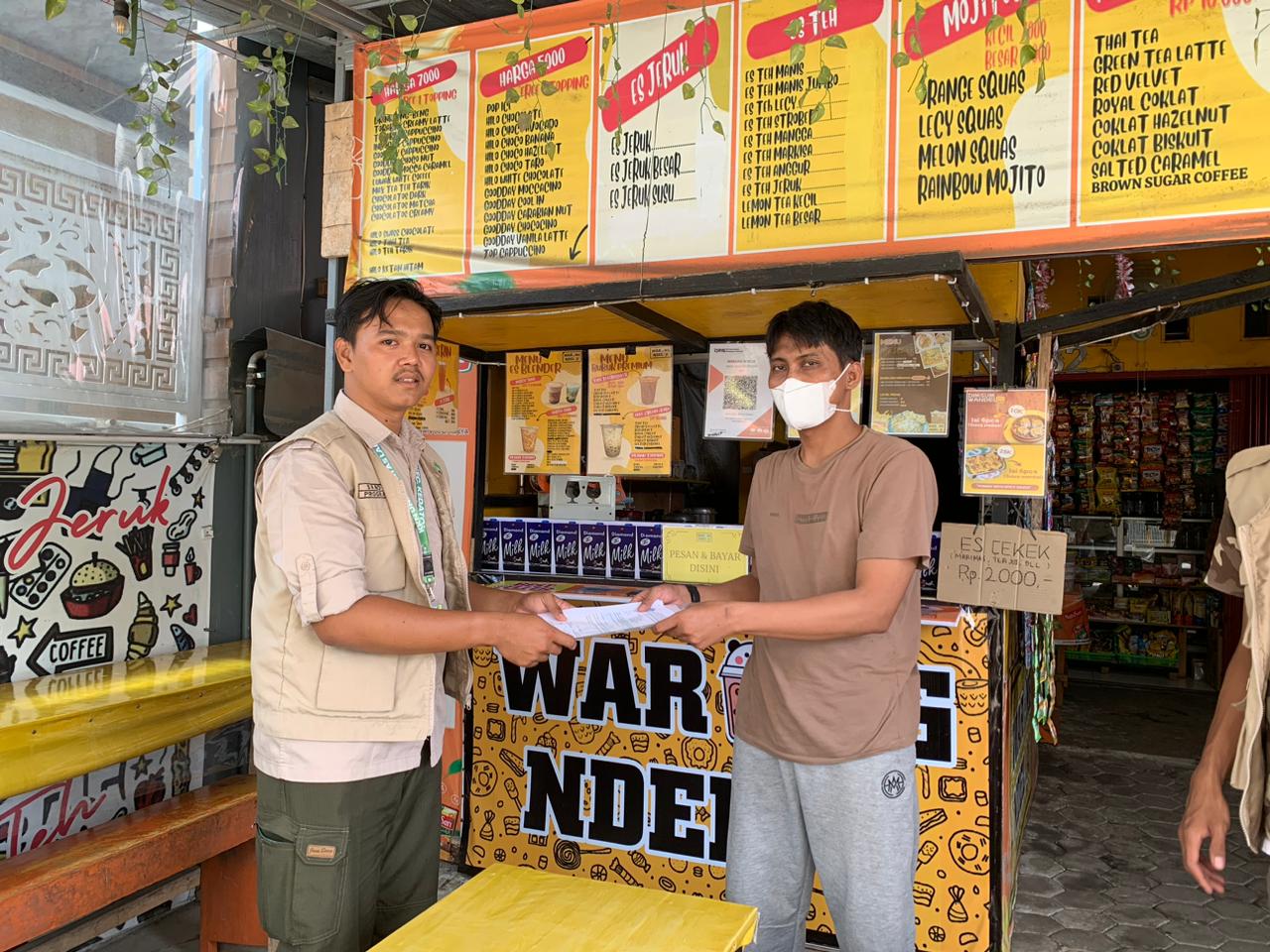
After that, needs are classified, and students assist with completing identity forms, approval forms, and other supporting documents. The NIB processing process is conducted through the OSS system, while maintaining the security of business actors’ personal data.
After the NIB is issued, students distribute it to MSMEs, along with education and opening a complaints service if problems arise in the future.
After receiving assistance through the SI LEGAL UMKM Program, MSME actors began to understand that NIB is not only an administrative document, but also an access point to various business facilities such as business electricity rates, capital, and government coaching programs.
To date, the SI LEGAL UMKM program has successfully issued over 20 NIBs, which are significant for the local economy in Sidodadi, demonstrating increased legal awareness and the readiness of MSMEs to move up a level. This has the potential to strengthen the local economic structure, making it more orderly, formal, and competitive.
However, the SI LEGAL UMKM program also faces challenges in its implementation, including limited access and data inconsistencies, such as NIKs not being synchronized with the Civil Registration Agency (Dukcapil) or difficulties with internet access. Furthermore, some MSMEs are unfamiliar with digital systems and require intensive support to ensure the process runs smoothly.
Overall, the public has shown high enthusiasm for the SI LEGAL UMKM Program. Many business owners have just learned that their businesses can and need formal legality. After receiving an explanation of the benefits, MSME owners feel supported and more confident in operating their businesses legally.
Going forward, the SI LEGAL UMKM Program is expected to continue and be developed sustainably by the sub-district government, involving the younger generation and local communities, so that more MSMEs can receive assistance with business legality. [Muzamil Kakar]