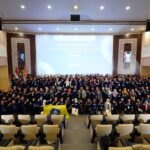
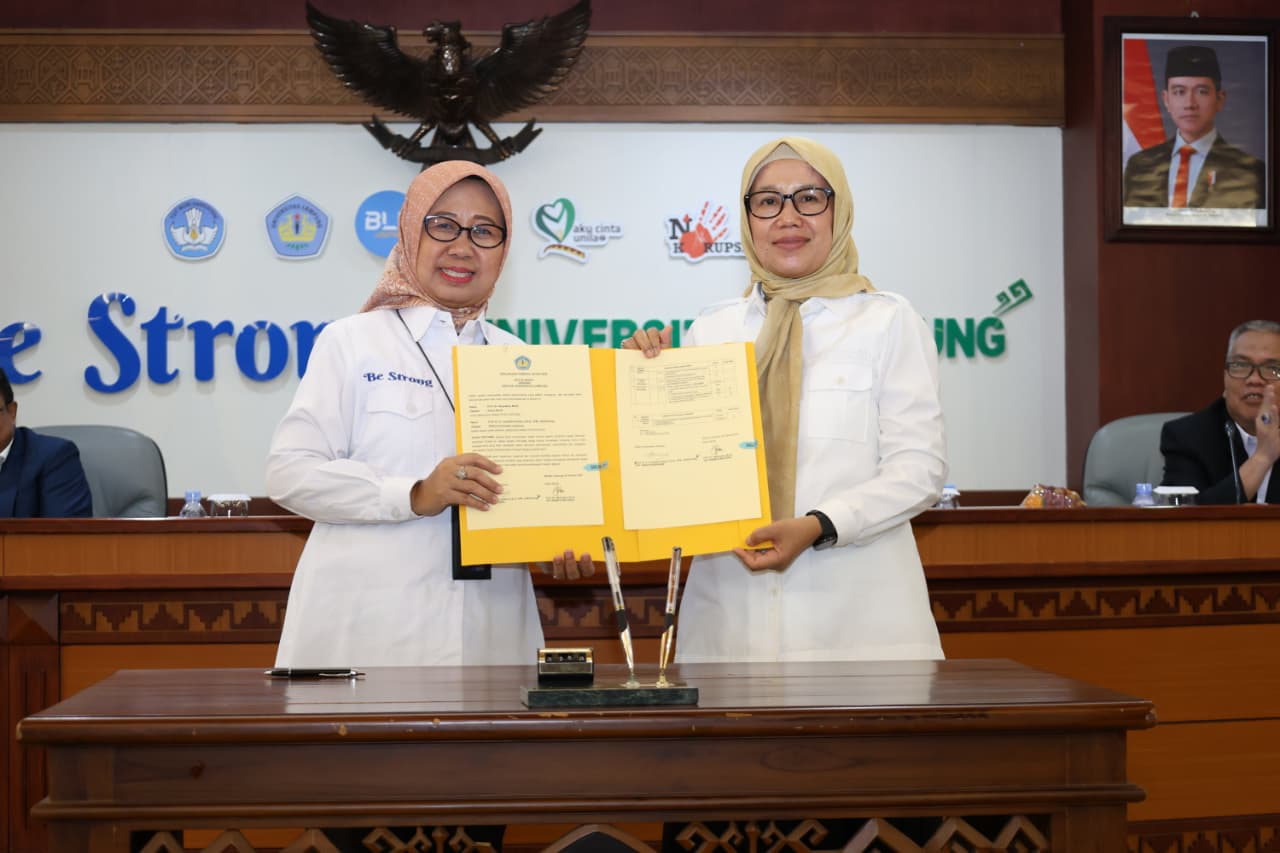
(Unila): The University of Lampung (Unila) affirmed its commitment to ensuring that all organizational activities generate real impact through the signing of the 2026 Work Unit Performance Agreement (PK) in the main meeting room on Monday, January 26, 2026.
This activity is an important part of the strategy to strengthen measurable, accountable, and results-oriented university governance, while also linking performance planning with budget management in an integrated manner.
Vice Rector for Planning, Cooperation, and Information Systems of Unila, Prof. Dr. Ayi Ahadiat, SE, MBA, explained that the Performance Agreement is an important instrument for changing the organization’s work pattern from mere administrative activities to impactful performance.
According to him, PK ensures that each work unit has a clear direction, measurable targets, and a real contribution to achieving the university’s goals.
“The PK ensures that our work does not stop at meetings, coordination, or leadership directives. What’s important is what decisions are made, what problems are resolved, and what impact they have on the university,” Prof. Ayi emphasized.
He added that the Work Unit PK was prepared as a direct derivative of the Rector’s Performance Agreement with the Ministry of Higher Education, Science, and Technology.
Thus, all work units operate within the same strategic policy framework. Each target in the PK is operationally designed and measurable, with an emphasis on performance achievement, not just budget utilization.
Furthermore, the Performance Agreement will serve as the basis for periodic monitoring and evaluation, the quality of performance reporting, and the determination of the remuneration system for lecturers and educational staff at Unila. This mechanism is expected to foster a fair, objective, and performance-based work culture.
In line with this, Unila Rector Prof. Dr. Ir. Lusmeilia Afriani, D.E.A., IPM., ASEAN Eng., said that the signing of the PK is part of a larger process of aligning the university’s annual performance and budget.
In this process, the Performance Agreement is the starting point, which is then followed by budget adjustments through revisions to the Ministry/Institution Work Plan and Budget (RKKL).
“We’re changing our paradigm. We’re no longer thinking about ‘what are the activities,’ but rather ‘what is the impact?’ The collective performance of work units will determine the university’s success in meeting established national targets,” said the Rector.
The Rector explained that the PK has a strategic role as a performance evaluation instrument that is reviewed routinely every two months in leadership meetings, as a basis for providing remuneration incentives based on performance achievements, and as the main basis in the RKKL revision process.
Through this budget revision, all funding allocations are ensured to align with agreed performance targets. As a concrete follow-up, all work unit leaders are required to directly lead the RKKL revision process, with a tight timeline until early February.
This policy aims to ensure operational activities can be carried out immediately from the beginning of the budget year, avoid delays in program implementation, and accelerate the achievement of the university’s strategic targets.
Through the synergy between the Performance Agreement and the RKAKL, Unila not only displays a wide range of activities, but ensures that each program produces measurable results, targeted decisions, and tangible impacts.
The signing of the 2026 Policy Agreement is expected to lay a strong foundation for realizing a superior, competitive Unila that makes a real contribution to society, the nation, and the state. [Muzamil Kakar]