(Unila): The use of antiseptic hand sanitizer or hand sanitizer has recently been regarded as necessities and habits of the modern society. Unfortunately, almost all of the products of hand sanitizers on the market contain up to 95% alcohol, which can leave irritation, dry skin, and digestive problems for humans.
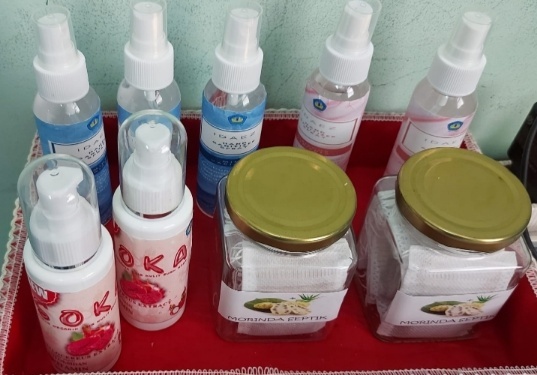
Dr. Dewi Sartika, Lecturer of Agricultural Product Technology (THP) Unila, and her team, among others, Dr. Subeki, Susilawati, M.Sc., and a student, Hendriawan Wibisono, conducted research to invent a hand sanitizer gel from hibiscus also known as waru that is low in alcohol and has natural antimicrobials.
According to Dewi, waru or hibiscus leaves contain saponins, flavonoids, and five phenolic chemicals, all of which constitute antimicrobial chemicals believed to effectively inhibit or kill microbial cells. Waru leaf extract is effective to inhibit the development of Bacillus subtilis and Eschericia coli bacteria at the concentration ranging from 5% to 20%.
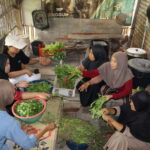
“Hibiscus leaves were chosen due to the abundant stock of the leaves in Lampung. The invention of hand sanitizer from hibiscus leaf will necessarily lead to an increased demand for the hibiscus leaves,” Dewi stated on Tuesday.
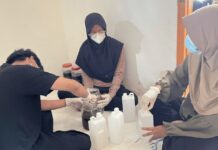
She explained the stages of inventing hand sanitizer gel, six samples of waru leaf extract concentrations of 0%, 5%, 10%, 15%, 20%, and 25% (w/v) in 100 ml of distilled water are first grouped for evaluation.
The second stage begins with the development of a thickening chemical CMC-Na of up to 2.5 grammes in a glass beaker, then slowly adding hot distilled water while stirring until the gel is evenly produced.
The following stage is the process of adding 1 ml of glycerin, 20 ml of alcohol (70%), 25 ml of lime extract to every single waru leaf extract, 0% (W0), 5% (W1), 10% (W2), 15% (W3), 20% (W4), and 25% concentrations (W5).
“Furthermore, the hand sanitizer’s quality was examined, including its inhibition against Staphylococcus aureus, pH, skin irritation, gel homogeneity, and dispersion,” said Dewi Sartika, who has been researching antibacterial properties of plants since 2014.
She continued to explain that the paper disc diffusion method was used to investigate the inhibition of Staphylococcus aureus germs. The first step is cultivating Staphylococcus aureus bacteria on nutrient agar media.
Following that, 1 ml of Staphylococcus aureus suspension was inoculated on the surface of the agar media, and paper discs soaked in hand sanitizer were placed on the media for 30 minutes.
According to Dewi, the W5 treatment showed the highest average score of the inhibitory zone, 16.18 mm, and the W0 treatment had the lowest score, 7.07 mm, based on the findings of the Smallest Significant Difference Test (BNT test).
“The inhibition zone against Staphylococcus aureus bacteria by the waru leaf extract is relatively strong,” Dewi stated.
Meanwhile, the pH test findings showed that the higher the concentration of hibiscus leaf extract is, the closer to neutral the pH will be. W0 (pH 5.22), W1 (pH 5.40), W2 (pH 5.50), W3 (pH 5.80), W4 (pH 5.90), and W5 (pH 5.90) indicated the pH scores in the six treatments.
According to Dewi, the irritation test was performed on ten male and female panellists aged 20 to 25 years. Hand sanitizer gel is applied to the palms of the hands four times and left on for ten minutes. The panellists then looked for signs of a red rash, itching, and swelling on the skin.
“Given that the findings of the hibiscus leaf hand sanitizer skin sensitivity test on the panellists did not demonstrate the incidence of rashes and irritation the hibiscus or waru leaf hand sanitizer is safe to use,” he stated.
Overall, Dewi added, the best results were obtained from the combination of 25% concentration of hibiscus leaf extract (W5) and an acid solution of lime extract.
Not only does the hibiscus leaf hand sanitizer result in the maximum inhibition against Staphylococcus aureus germs of 16.18 mm, but it also has a pH close to neutral, 6.1, which is expected not to leave skin irritation. The hand sanitizer also forms a homogeneous gel and has a decent dispersion of 6.4 cm. [PR Team]