(Unila): The research team members (Dr. Erdi Suroso, S.T.P., M.T.A., Dr. Ir. Tanto Pratondo Utomo, M.Si., and Dr. Ir. Subeki, M.Si., M.Sc.) at the Faculty of Agriculture (FP), the University of Lampung (Henceforth Unila) invented Robusta coffee with a taste of wine; however, it does not contain any alcohol.
The unila.ac.id website team conducted interviews with the three research team members, Tuesday, March 2, 2021, in the office of the Head of the Department of Agricultural Product Technology, Faculty of Agriculture.
Utomo explained the background of the research in the coffee sector. According to him, research on the ‘Wine Robusta Coffee’ has been carried out since 2016. It started in an event of Fostering Young Agricultural Entrepreneurs initiated by the Ministry of Agriculture. The event involved the Faculty of Agriculture and its alumni.
“Unila, especially the Faculty of Agriculture, was chosen to be involved in the event”, said Utomo.
Through the event, our alumni together with the Faculty of Agriculture were awarded fund by the Ministry of Agriculture to conduct research on inventing wine coffee.
“Lecturers continue to produce technological and product innovations, the alumni and students are involved in the promotion and marketing of the product. This is a form of higher education, tridarma, activities in the field of research and community services”, said Utomo.
Meanwhile, Subeki explained the research process of Wine Robusta Coffee, which was carried out at the Agricultural Products Quality Testing Laboratory, ISO 17025 certified.
He further stated that the Wine Aceh Gayo Coffee product, which is processed from Arabica Gayo coffee, has been well-known in the market so far. This high-priced fermented coffee may reach millions of rupiah per kilogram in the market.
This inspired Suroso, Utomo, and Subeki to conduct research, testing the Robusta coffee varieties, one of the leading commodities in Lampung, known as Bumi Ruwa Jurai.
“To get a level of acidities like Arabica coffee and a specific taste of wine, we conducted different stages of experiments, ranging from the fermentation of coffee seeds, fermentation of peeled coffee beans, and fermentation of dry coffee beans. Finally, we invented the right formula so that the final coffee product can have the maximum wine taste”, said Subeki.
Subeki added, the process of making Wine Robusta Coffee started from the selection of premium quality raw materials. To do this, he particularly selected coffee beans from Liwa, Western Lampung, and Ulubelu, Tanggamus regency, in which the coffee is grown in the highlands of above 1,500 meters above sea level (asl).
“Coffee grown at an altitude above 1,500 asl and picked once a year results in a better level of maturity with less sap and water contents than that picked from trees with an altitude below 1,500 asl”, he said.
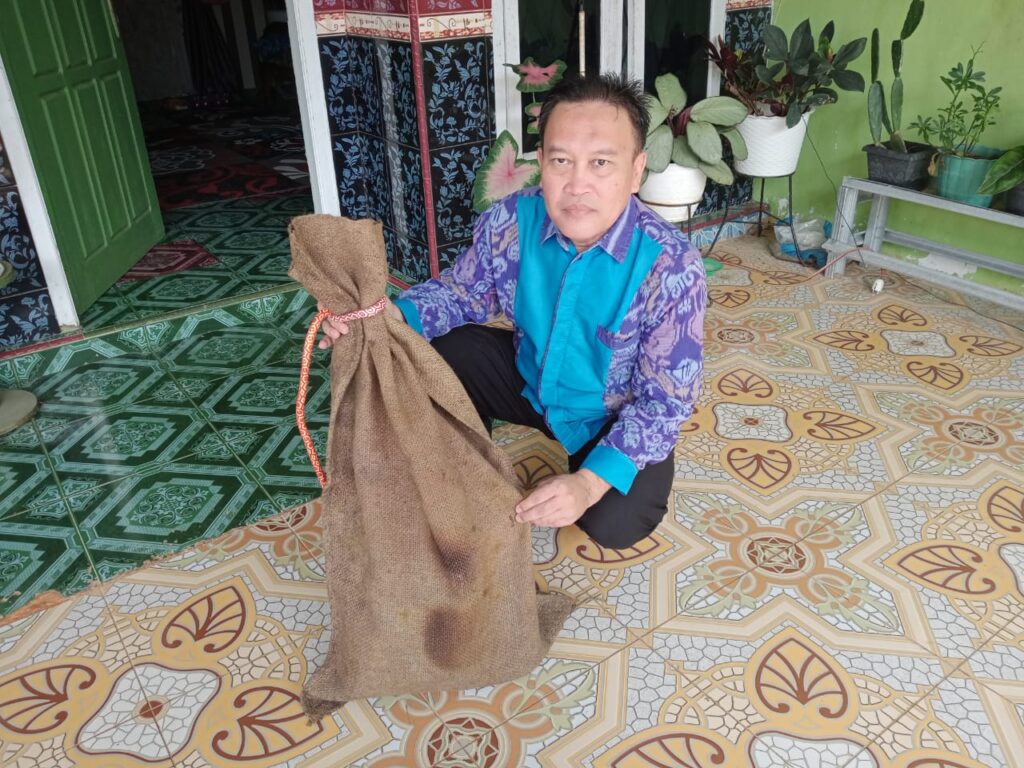
Furthermore, red coffee seeds with premium quality were processed for fermentation in sacks and then stored in the laboratory. The fermentation and drying processes were carried out three times. The first fermentation took place about seven to ten days, and then drying processes in the sun spent for five hours.
The second fermentation was done less duration of times than that of the first, approximately five days but drying processes remained the same as the first fermentation, five hours. The last fermentation was carried out only for one day and drying processes needed seven hours.
“The drying process can be done directly under sunlight, but during the research, we made use of an oven we have in the lab, instead of sunlight due mainly to practicality reasons,” said Subeki.
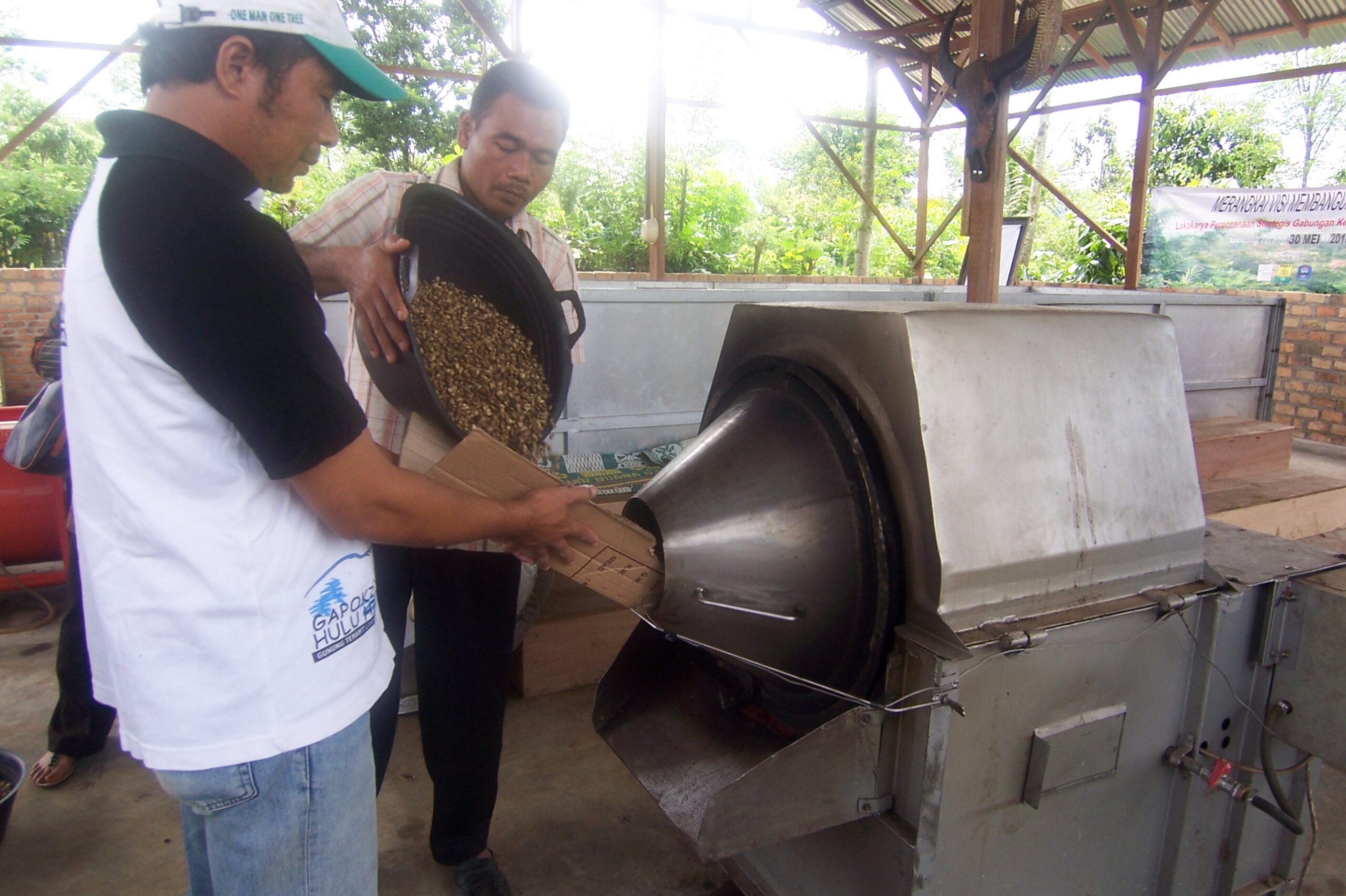
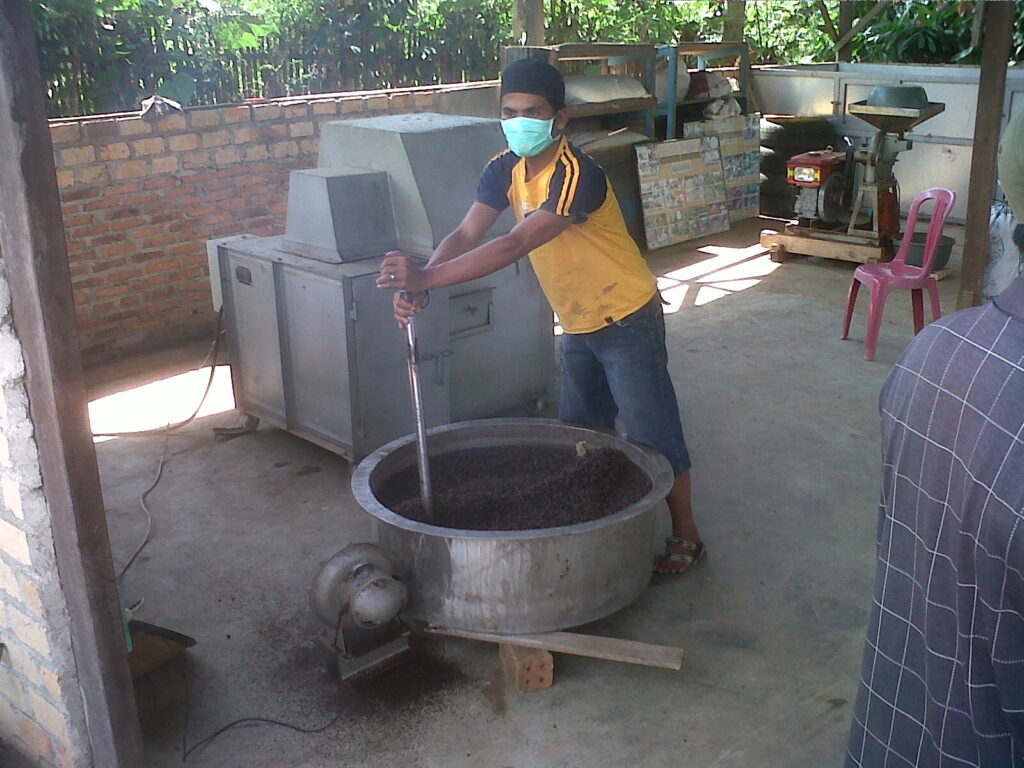
According to Subeki, the repeated fermentation and drying process create the aroma of wine of the coffee beans. The next process is to first skin-off the coffee beans using a machine, dry them in the sun to strip the shells, then dry the green beans, roast them, and finally grind them into coffee powder.
Natural Fermentation
According to Subeki, the coffee fermentation process is carried out naturally in the sense that it is undertaken without microbes. This is done in order to sort the types of microbes that are naturally selected and work actively in producing the wine aroma.
“We employ this natural method for future considerations that we will have to continue to develop specific coffee flavours”, said the coffee researcher.
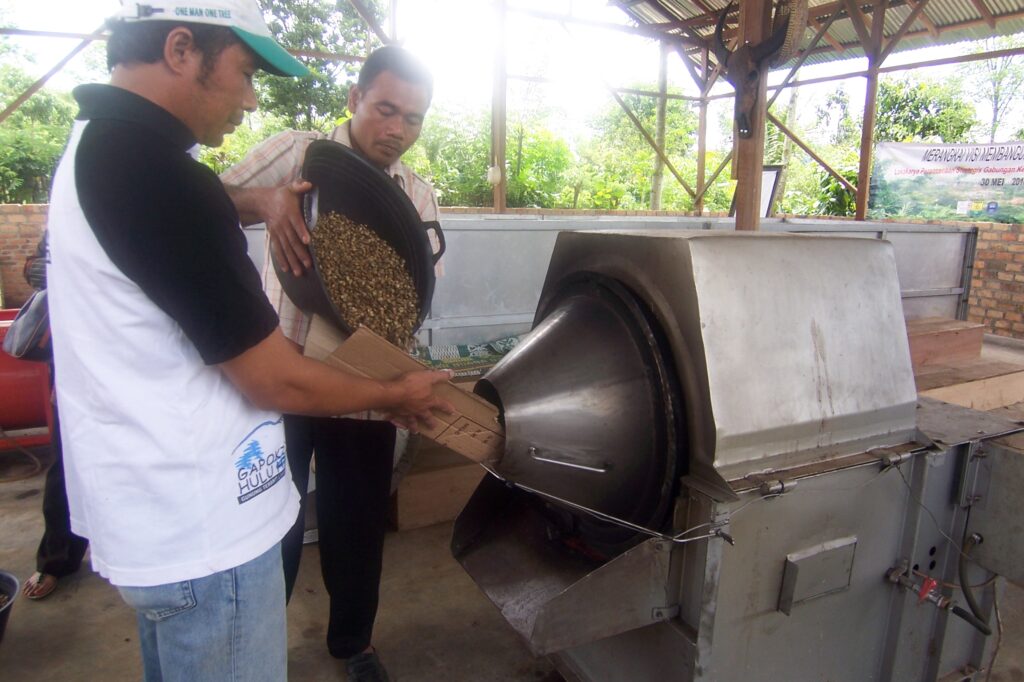
The roasting treatment process of this Wine Robusta Coffee differs in treatments from those of any other wine coffee. To maintain the aroma of wine produced from the fermentation process, the temperature is necessarily maintained within 150-180 degrees Celsius.
“Generally, coffee is roasted with a temperature above 200 degrees Celsius to produce dark coffee. However, we do it with a temperature below 200, approximately 150 to 180 degrees Celsius. This sort of treatment may result in the final coffee product which is more light or medium”, explained Subeki.
The results of the laboratory testing on the final product of Wine Robusta Coffee indicate caffeine content less than 2% with the chlorogenic acid. This, according to SNI standards, can be deemed an antioxidant as the caffeine does not exceed 4%. No alcohol content and its derivatives were found as well.
In some literature, it is reported that Robusta coffee has a higher chlorogenic acid content compared to Arabica. This is, of course, a distinct advantage of the Wine Robusta Coffee product.
To enjoy this Wine Robusta Coffee, added Suroso, the amount of water and the heat of water need to be carefully considered so that the aroma of wine comes out and has a health impact. Brewing this coffee using a V60 dripper can be done with 12 grams of coffee with 150 ml of water.
“This leads coffee to have an effect on human health; it is advisable to drink coffee without sugar and brew it with a temperature of 85 – 90 degrees Celsius”, said Suroso, a Wine Robusta coffee connoisseur.
Competing in the National Market
Regarding marketing, Utomo said, the Wine Robusta Coffee has been marketed by one of the alumni to penetrate the national market in Yogyakarta and Bandung, with the trademark of COF-FEE-IN using a tagline of “Taste of Lampung”. A 200-gram Wine Robusta Coffee pack is sold at IDR20,000.
The young entrepreneur who is an alumnus of the Faculty of Agriculture, Unila, has partnered with coffee farmers with a harvesting capacity of 500 kg to 1 ton of red-picked coffee. After carrying out the fermentation and drying process, the coffee skin is peeled, then stored in the form of dry coffee beans (green beans) to last longer.
“The alumnus already knows the taste of the market. Some of the green beans are roasted to produce medium to dark coffee and sold to cafes; the medium roasted green beans are sold to coffee lovers”, said Utomo.
Suroso added, for the past two years, the marketing of Wine Robusta Coffee has also penetrated foreign markets, including Malaysia, through the hands of alumni.
“The alumni interested in marketing this coffee asked us to send the product abroad to them. They try to market the product there, but it is still temporary and in a small capacity”, said Suroso.
Suroso is grateful that the results of the study can foster young entrepreneurs to compete in the national industry. The final formula of the Wine Robusta Coffee with its maximum taste will be submitted for a patent in the future. [PR Tim]